Postbiotics for Gut Health: What Early Human Data Shows
Quick Answer: What Postbiotics Actually Do
Postbiotics are heat-treated bacteria or compounds that bacteria make, supplied finished rather than alive, and people use them daily to support digestive comfort. Early human data shows these preparations are well tolerated and may help support digestive comfort and stool regularity over a few weeks of daily use. Trials so far are small and short, and each uses a different preparation, so results for weight, immune outcomes or long-term microbiome make-up are not established.
- Typical trial length: four to twelve weeks of daily use.
- What gets measured: symptom questionnaires, stool frequency and tolerability — rarely a hard clinical outcome.
- The biggest gap: no two products use the same organism, the same heat treatment or the same dose, so results do not transfer between them.
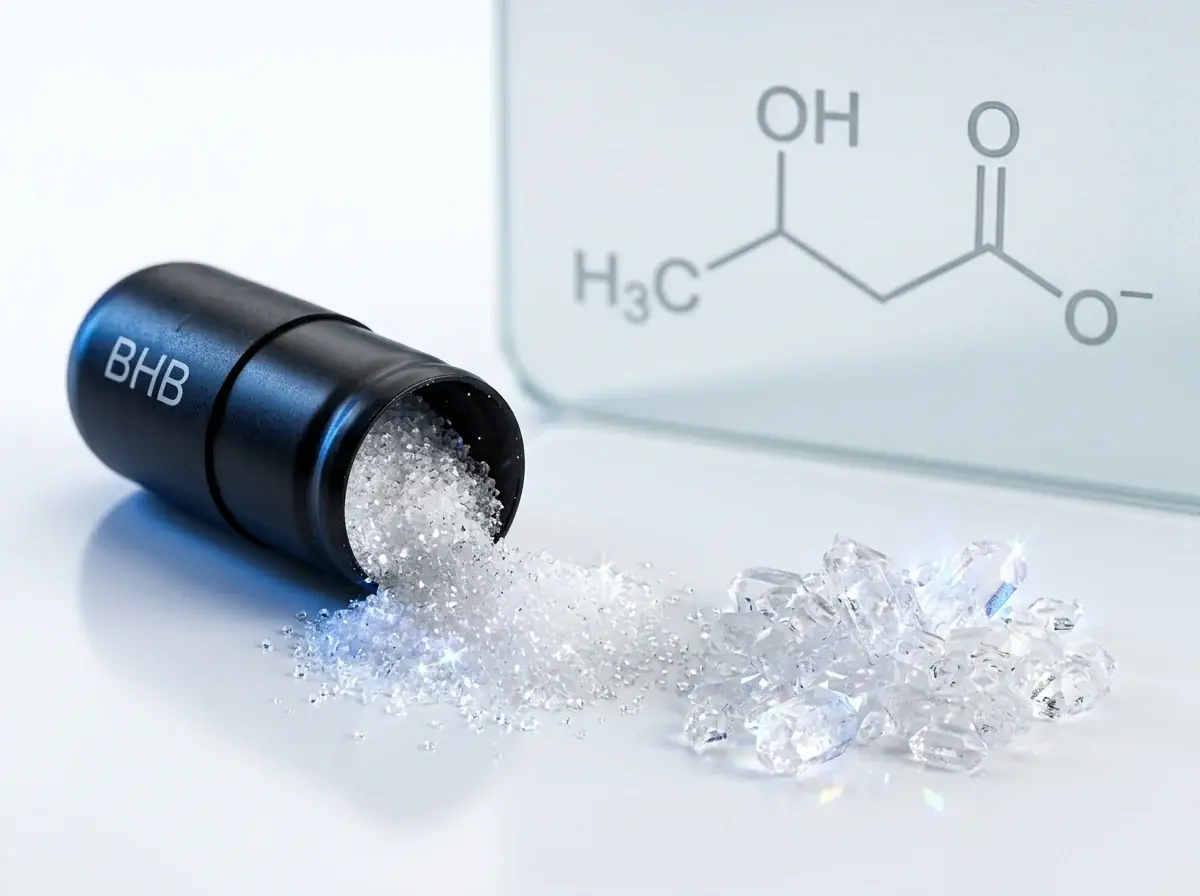
What a postbiotic actually is
The word is newer than the science. For decades, researchers noticed something inconvenient about probiotic trials: killed bacteria sometimes produced effects similar to live ones. If a culture was pasteurised by accident, or deliberately heat-inactivated as a control arm, the control arm occasionally did about as well as the treatment arm. That observation eventually got a name.
An international consensus panel settled on a working definition in 2021: a postbiotic is a preparation of inanimate micro-organisms and/or their components that confers a health benefit on the host. Three things fall inside that fence. First, heat-killed or tyndallised whole cells, sold under the same species names you already recognise from yoghurt labels. Second, cell wall fragments and surface proteins that the immune system in the gut lining appears to notice. Third, the small molecules bacteria excrete while fermenting fibre — short-chain fatty acids such as butyrate, acetate and propionate being the ones most often discussed.
What does not fall inside the fence is any live organism, which is the whole commercial point. A live culture has to survive manufacturing, shipping, a warm shelf, your stomach acid and your bile before it can do anything. A postbiotic has already been through the worst of that. It can be dosed by weight, standardised by cell count, and it does not lose potency in a hot delivery van. For a formulator, that is an enormous practical advantage. For a shopper, it means the number printed on the box is more likely to be the number that reaches you.
What the early human data does show
Three findings recur often enough across the published trials to be worth taking seriously.
Tolerability is the strongest of them. Across the studies published so far, heat-treated preparations are consistently reported as well tolerated in healthy adults, with side effect rates broadly similar to placebo. (Nutrients 2024, PMID 38474848) Mild gas or a change in stool consistency in the first week is the usual complaint, and it usually settles. That is a real finding, and for a category sold to people who already have sensitive digestion, it matters.
Digestive comfort is the second. Several small randomised trials in adults with functional digestive complaints report improvements in bloating scores, abdominal discomfort or stool regularity compared with placebo over four to twelve weeks. (NIH NCCIH, Probiotics) These are self-reported symptom scales, which move easily, and placebo responses in digestive research are famously large. The effects reported are modest. But they point the same direction more often than chance would predict, which is the beginning of a signal. Where a digestive supplement does have clean trial support the picture is narrower, as the lactase enzyme trial data for lactose intolerance shows.
The third finding is mechanistic rather than clinical. Human and laboratory work agrees that fragments of bacterial cell wall interact with receptors on the cells lining the gut, and that short-chain fatty acids are a preferred fuel for the cells of the colon. That is well established biology. It explains why a dead bacterium might do anything at all. It does not, by itself, prove that swallowing one produces a benefit you would notice.
Where JellyTide fits, honestly
JellyTide is an apple cider vinegar and BHB gummy, not a postbiotic product — there is no named postbiotic on its panel and we are not going to pretend otherwise. If a once-daily gummy taken before a meal is the habit you are actually looking for, the full Supplement Facts panel and current options are on the order page.
See the label and optionsWhat the early human data does not show
Here is where honesty is more useful than enthusiasm.
It does not show a weight-loss effect. Some rodent work and a handful of small human studies have looked at body composition or metabolic markers with heat-treated preparations, and the results are inconsistent, the sample sizes are small, and the follow-up is short. Anyone selling a postbiotic as a fat-loss ingredient is running ahead of the evidence by a considerable margin.
It does not show immune benefits you can rely on. Laboratory measures of immune signalling shift in some studies. Whether that translates into fewer infections, or into anything a person would notice, has not been established in trials large enough or long enough to answer the question.
It does not show that results transfer between products. This is the one most shoppers miss. A trial on one heat-treated strain, processed a particular way, at a particular cell count, tells you about that preparation. (NIH ODS, Probiotics) It tells you very little about a different species, inactivated by a different method, at a tenth of the dose. Ingredient categories do not have evidence. Specific preparations do.
The honest summary of the postbiotic literature in 2026 is that it is promising, coherent with what we know about gut biology, and far too young to justify the confidence with which it is marketed. Promising is not the same as proven, and saying so is not scepticism — it is just reading the dates on the papers.
Postbiotics, probiotics, prebiotics and synbiotics compared
Four words, endlessly confused, and the difference is genuinely simple once you see it laid out. The table below compares what each one is, the doses that show up in human trials, how stable it is on a shelf, and how strong the human evidence currently is.
| Category | What it is | Typical dose in trials | Shelf stability | Human evidence strength |
|---|---|---|---|---|
| Probiotic | Live micro-organisms | 1–50 billion CFU daily | Poor to moderate; needs cool storage or protective coating | Moderate, and strain-specific |
| Prebiotic | Fibre your own bacteria ferment | 3–10 g daily | Excellent | Moderate for regularity; weaker for anything else |
| Synbiotic | A prebiotic plus a probiotic in one product | Combination of the two rows above | Limited by the live component | Emerging; see our companion article |
| Postbiotic | Inactivated cells or their metabolites | Commonly stated as 10 to 50 billion cells, or milligrams of metabolite | Excellent; heat and time do not degrade it further | Early; small and short trials |
If you are comparing options and searching for the best gut health supplement or the best gut health daily supplement, that last column is the one to read first. Categories with excellent stability and thin evidence are attractive to manufacturers for reasons that have nothing to do with whether they work.

Dose, form and how the trials were actually run
Read a postbiotic label carefully and you will notice something odd: the units change from product to product. Some declare a cell count, usually expressed in billions, because that is how the inactivated culture was counted before it was killed. Some declare a weight in milligrams of dried preparation, which tells you nothing about cell density unless the manufacturer also tells you the density. Some declare a proprietary blend, which tells you nothing at all.
The published trials generally used a single daily serving, taken with or shortly before food, for a defined period with a placebo arm. Adherence was tracked. Outcomes were symptom questionnaires far more often than laboratory endpoints. Almost none of these studies followed participants after they stopped, so nobody can say what happens when you finish the bottle.
Two practical implications follow. First, a product that hides its postbiotic content inside a proprietary blend cannot be matched against any trial, because you cannot know whether you are getting a trial-level dose or a token pinch. Second, a four-week trial cannot tell you about a four-month habit. Both of those are limits of the research rather than criticisms of the ingredient.
What a gut health microbiome support supplement cannot do
This section exists because most pages on this topic skip it.
A gut health microbiome support supplement cannot diagnose anything. Persistent changes in bowel habit, blood in the stool, unintended weight loss, night-time symptoms or pain that wakes you are reasons to see a clinician, not reasons to try a different capsule. Supplements are not a substitute for a diagnosis, and self-treating a symptom that needs investigating is the genuinely risky move here.
It cannot repair a diet. The bacteria in your colon feed largely on fermentable carbohydrate that your own enzymes cannot break down. A supplement contributes a rounding error next to what you eat every day. If fibre intake is low, that is the lever with the best evidence behind it, and no capsule substitutes for it. Pairing that fibre with an organism in one product is the idea behind synbiotic formulas and what their combined evidence shows.
It cannot rewrite your microbiome. Studies that sequence stool before, during and after supplementation typically find modest shifts during use that fade within weeks of stopping. Your resident community is shaped by years of diet, geography, medication and genetics. A few weeks of anything moves it temporarily at best.
And it cannot treat, cure or prevent disease. That is not legal boilerplate on this page — it is an accurate description of what the evidence supports. Dietary supplements sit in a category defined by supporting normal function, and postbiotics are nowhere near the standard of proof a medicine has to meet.
How to read a label without being sold to
Four questions get you most of the way there.
Is the ingredient named specifically? A genus, a species and a strain designation, or a named metabolite with an amount. "Proprietary gut blend" is not an answer.
Is there a number attached to it? A cell count or a milligram weight for the actual active, not for the blend it sits inside. Blend totals are the oldest trick in the category: 500 mg of blend can be 495 mg of filler.
Does the number match anything that was studied? If a trial used tens of billions of cells and the label offers a few million, you are buying the word, not the ingredient. We ran exactly this arithmetic on the BHB salts in this product's own panel in our breakdown of what BHB ketone salts actually do, and the method transfers directly.
Would you keep taking it? Every trial that found anything found it in people who took the product daily for weeks. A format you abandon after nine days has an effect size of zero regardless of what is inside it. This is the entire practical argument for gummies over capsules, and it is a real argument — adherence is the most under-rated variable in supplement research.
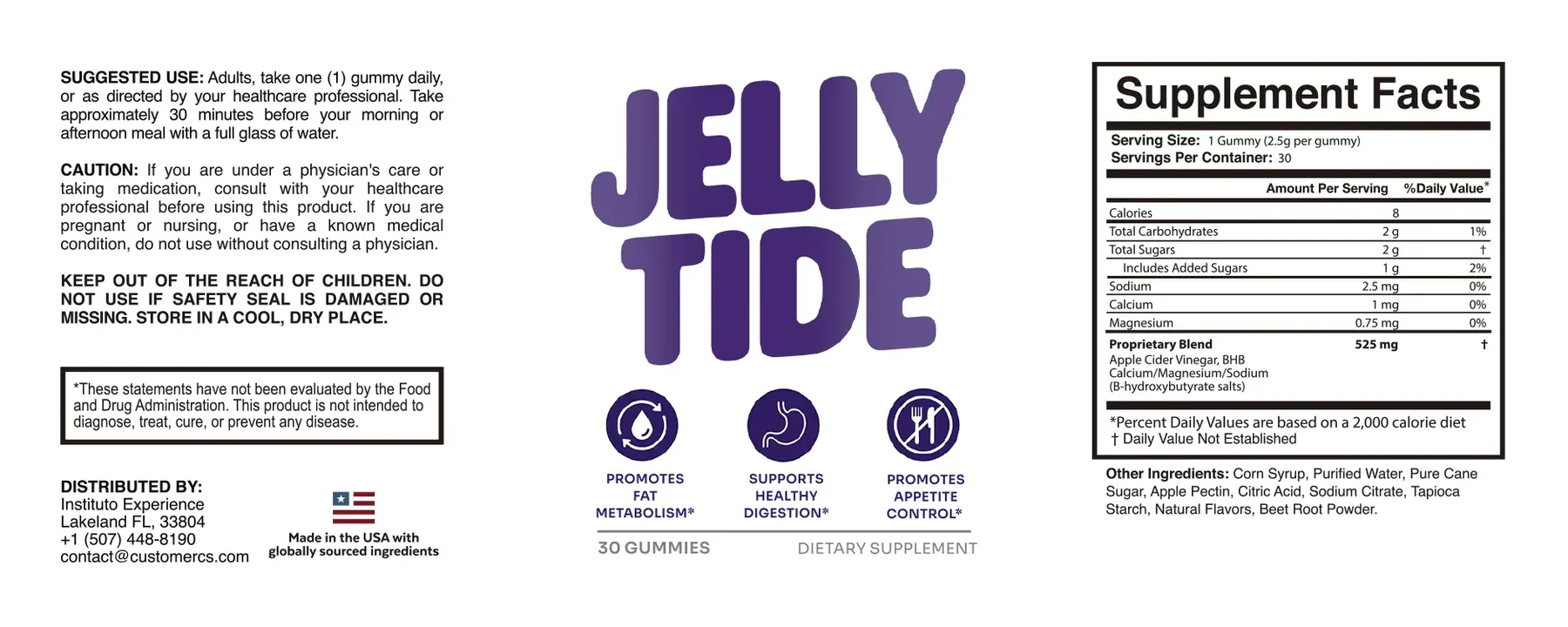
Where this leaves an apple cider vinegar gummy
Apple cider vinegar is a fermented food, and people searching for apple cider vinegar gummies for gut health often assume the two categories overlap. They do not, quite. Vinegar contains acetic acid, which is a fermentation product, and acetate does appear among the short-chain fatty acids discussed in postbiotic research. But an ACV gummy is not a standardised postbiotic preparation, has not been studied as one, and should not be bought as one.
What an ACV gummy is, honestly, is a convenient way to keep a vinegar habit that most people abandon in liquid form. The evidence for vinegar itself is modest and mostly concerns post-meal blood glucose response rather than the microbiome. That is a narrower claim than the category usually makes, and it is the claim we are comfortable defending. Our home page sets out what is in JellyTide, in what amounts, and what those amounts can reasonably support.
If you want a postbiotic, buy a postbiotic with a named strain and a stated dose. If you want a daily vinegar routine you will actually keep, that is a different product and a different question.
Medical note: this article is general wellness information, not medical advice, and it summarises published evidence rather than making a product claim. JellyTide is a dietary supplement, not a drug, and is not intended to diagnose, treat, cure or prevent any disease. Speak to a healthcare professional before starting any supplement, especially if you are pregnant, nursing or taking medication.
Frequently asked questions
Are postbiotics better than probiotics?
Not better, different. Postbiotics are heat-treated bacteria or the compounds bacteria produce, so they do not need to survive the stomach or stay alive on a shelf. That makes them more stable and easier to standardise, but the human evidence behind them is younger and thinner than the evidence behind well-studied live strains.
How long do postbiotic trials usually run?
Most published human studies run somewhere between four and twelve weeks. That is long enough to pick up changes in digestive comfort or stool regularity, and too short to say anything about long-term outcomes such as body weight or metabolic health.
Does a gut health microbiome support supplement change my microbiome permanently?
The evidence says no. Studies that sequence stool before and after supplementation usually find that any shift fades within weeks of stopping. Diet, fibre intake, medication and sleep exert far larger and more durable effects on which bacteria live in your gut.
Do apple cider vinegar gummies contain postbiotics?
Usually not. Apple cider vinegar is a fermented food and contains acetic acid, which is a fermentation product, but that is not the same as a standardised postbiotic preparation. Read the Supplement Facts panel: if a named postbiotic ingredient is not listed there, the product does not contain one.
What is a postbiotic supplement made of?
A postbiotic supplement contains bacteria that have been heat-treated, or compounds that bacteria produce, rather than live cultures. It is supplied to you already finished, so there is nothing alive to keep in the bottle.
Sources
- NIH NCCIH — Probiotics: What You Need To Know
- NIH Office of Dietary Supplements — Probiotics fact sheet for health professionals
- PubMed — randomised controlled trials indexed under postbiotics
- Harvard T.H. Chan School of Public Health — The Nutrition Source: The Microbiome
- Mayo Clinic — expert answers on probiotics and prebiotics
- Kerksick CM et al. It's dead! Can postbiotics really help performance and recovery? A systematic review. Nutrients 2024 (PMID 38474848)
Read the panel before you buy anything
Whether you are weighing up the best gut health supplement or simply working out where to buy apple cider vinegar gummies without guessing at the dose, the same rule applies: named actives, real numbers, then decide. JellyTide's full panel and current ordering options are one click away.
View JellyTide options