BHB Ketone Salts: What They Do at Research Doses
Quick Answer: Do BHB Salts Do Anything?
BHB ketone salts are beta-hydroxybutyrate salts that raise blood ketone levels for one to three hours at the doses used in research, usually 10 to 25 grams. That is a different thing from burning your own fat, and the appetite studies found modest, short-lived effects. A gummy holds tens of milligrams, so the research doses and a gummy dose are far apart.
- Typical research dose: 10–25 g of ketone salt or ester.
- Typical gummy dose: tens of milligrams — hundreds of times less.
- What it is not: a substitute for the carbohydrate restriction that produces endogenous ketosis.
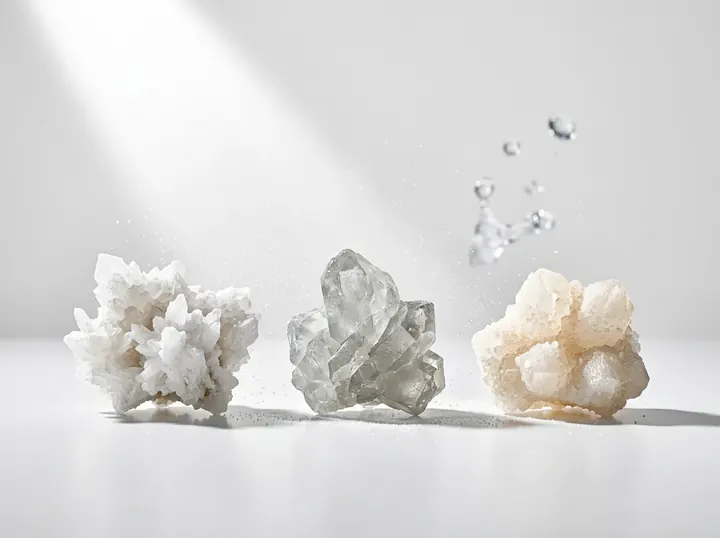
What beta-hydroxybutyrate is
Beta-hydroxybutyrate is not an exotic supplement ingredient. It is one of three ketone bodies your liver makes from fatty acids whenever glucose is scarce — overnight, during a fast, or on a very low carbohydrate diet. Your brain, heart and muscles can burn it. Measuring it in blood is how anyone confirms they are in nutritional ketosis.
An exogenous ketone supplement skips the liver. BHB is bound to a mineral — calcium, magnesium, sodium or potassium — to make a stable salt you can swallow. Absorb it and blood BHB rises within thirty to sixty minutes, whatever you ate that day.
What the research measured
The literature on ketone salts is small but consistent about one thing: they raise blood ketones. A typical study gives 11 to 12 grams of BHB salt and records blood BHB climbing to somewhere around 0.5 to 1.0 mmol/L, peaking near an hour and returning to baseline within three. (Front Physiol 2017, PMID 29163194) Ketone esters, which taste worse and cost more, push it higher. Powders and drinks can carry that much material and a chew cannot, which is the real trade-off behind weight loss gummies versus pills.
What the research is far less consistent about is whether any of that matters for body composition. Some appetite trials report a short-lived reduction in hunger ratings and in the hunger hormone ghrelin after a large ketone drink. (Obesity 2018, PMID 29105987) (Diabetes Obes Metab 2021, PMID 33852195) Others find nothing once you control for how unpalatable the drink is. There is no body of evidence showing that swallowing ketones causes sustained fat loss, and there is a plausible argument in the other direction: if your blood is full of a fuel you drank, your body has less reason to mobilise the fuel already stored on you.
The dose is the whole story
This is where an ACV-plus-keto gummy has to be read carefully. Ketone salts are mostly mineral by weight — calcium BHB is about 16% calcium, magnesium BHB about 11% magnesium, sodium BHB about 18% sodium. That is chemistry, not marketing, and it means the mineral rows on a Supplement Facts panel are a window into the ketone content even when the blend is proprietary.
Run that backwards on this product's own label — 1 mg calcium, 0.75 mg magnesium, 2.5 mg sodium per gummy — and you land at roughly 6, 7 and 14 milligrams of the three salts. Call it 25 to 30 mg in total, against the 10,000 to 25,000 mg used in the trials. (NIH NCCIH, Weight Loss and Complementary Health Approaches) That is not a smaller dose of the same thing. It is a different thing. Running that arithmetic on a panel is one of the five label tests for the best keto ACV gummies.
Why manufacturers add it anyway
Three reasons, none of them sinister. The word "keto" sells. A trace of mineral BHB is cheap and lets a label list three recognisable actives instead of one. And the minerals themselves are harmless at these amounts — 2.5 mg of sodium is nothing next to a 2,300 mg daily limit.
The problem is only that a shopper reads "BHB Calcium/Magnesium/Sodium" on a panel and imagines the dose from the studies. If you want the effect the research describes, you need grams, and you will find them sold as unflavoured powders and drinks, not gummies. The wider question of whether the gummy as a whole earns its keep is one we take up in whether ACV keto gummies actually work.
What to do with this
Judge an ACV-plus-keto gummy as an apple cider vinegar gummy, because by weight that is overwhelmingly what it is. If the vinegar habit is what you want — taken before a meal, kept up for a couple of months — the format is a genuinely good way to keep it. If you specifically want exogenous ketones, this is not the product for it, and no amount of front-of-bottle styling changes the arithmetic on the back.
Medical note: this article is general wellness information, not medical advice, and it reviews published evidence rather than making a product claim. JellyTide is a dietary supplement, not a drug, and is not intended to diagnose, treat, cure or prevent any disease. Speak to a healthcare professional before starting any supplement, especially if you are pregnant, nursing or taking medication.
Frequently asked questions
How much BHB do ketone studies actually use?
Most human trials use between 10 and 25 grams of ketone salt or ester in a single serving. That reliably raises blood BHB for one to three hours.
Do ketone salts put you in ketosis?
They raise blood ketone levels, which is not the same as nutritional ketosis. Nutritional ketosis is your own liver producing ketones because carbohydrate is scarce. Drinking ketones raises the number without the underlying state.
Can you work out the ketone dose inside a proprietary blend?
Roughly, yes. BHB salts are mostly mineral by weight, and mineral rows must be declared separately on the panel. Divide the declared mineral by the mineral fraction of the salt and you get an upper-bound estimate.
Are ketone salts dangerous?
At the doses in gummies they are trivial. At the gram doses used in research the main complaints are gastrointestinal upset and the mineral load itself, worth discussing with a doctor if you are on a sodium-restricted diet or have kidney disease.
How long do BHB ketone salts stay in your blood?
At research doses of 10 to 25 grams, blood ketone levels stay raised for about one to three hours. A gummy with tens of milligrams is a much smaller amount.
Sources
- PubMed Central — trials of exogenous ketone salts and blood BHB response
- NIH Office of Dietary Supplements — ingredient fact sheets
- NIH NCCIH — Weight Loss and Complementary Health Approaches
- FDA — Questions and Answers on Dietary Supplements
- Stubbs BJ et al. On the metabolism of exogenous ketones in humans. Front Physiol 2017 (PMID 29163194)
- Stubbs BJ et al. A ketone ester drink lowers human ghrelin and appetite. Obesity (Silver Spring) 2018 (PMID 29105987)
- Vestergaard ET et al. Acute ketosis inhibits appetite and decreases plasma concentrations of acyl ghrelin in healthy young men. Diabetes Obes Metab 2021 (PMID 33852195)
See the full label first
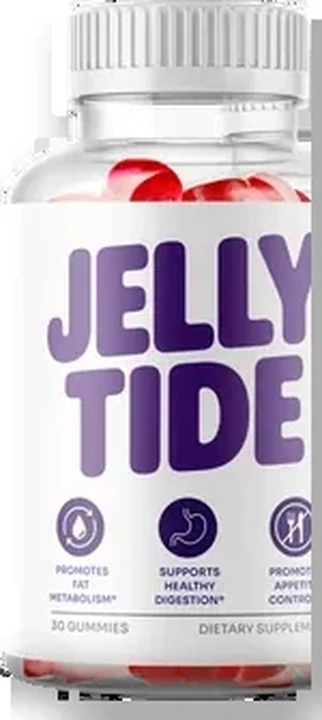
The complete JellyTide Supplement Facts panel is transcribed and photographed on the home page, along with the arithmetic on how much of the 525 mg blend can be ketone salt.
Read the panel