Synbiotic Supplement: Prebiotic Plus Probiotic in One
Quick Answer: Do Synbiotics Beat Their Own Ingredients?
A synbiotic supplement is a probiotic and a prebiotic sold together, so the fibre can feed the organism, and people use it to support digestive regularity and comfort. Trials show it can help with both, though almost none compare a synbiotic against its own probiotic part alone. The dose printed on the label matters more than the word on the front, and many combination products carry less fibre than the trials used.
- Prebiotic dose in trials: commonly 3–10 g of fibre a day.
- Prebiotic dose in many blends: a few hundred milligrams — a token amount.
- What is missing: head-to-head studies of the combination against its own parts.

What a synbiotic actually is
The definition is stricter than the marketing. A 2020 consensus statement from the International Scientific Association for Probiotics and Prebiotics defined a synbiotic as a mixture of live micro-organisms and a substrate selectively used by host micro-organisms, conferring a health benefit. Two words in that sentence do a lot of work: mixture and selectively.
The same statement drew a line down the middle of the category. A complementary synbiotic is simply a probiotic and a prebiotic packed together, each expected to work on its own terms. A synergistic synbiotic is one where the fibre was chosen specifically because the organism in the same capsule uses it. The second is a far higher bar, and it requires evidence that this particular organism prefers this particular substrate.
Almost everything sold on a shelf is the first kind. That is not fraud — a complementary synbiotic is a legitimate category with its own definition. But it means the implied promise, that the fibre in the capsule is specifically feeding the bacteria in the capsule, is usually unsupported. Nothing on the label distinguishes the two, so you cannot tell by reading it. You can only tell by whether the manufacturer cites work showing the pairing was deliberate.
The theory, and why it is attractive
The logic is genuinely appealing, which is why the category grew so fast. Swallowed bacteria face a hostile trip: stomach acid, bile, a resident community that is already established and not looking for lodgers. Most of what you take does not colonise. It passes through, does whatever it does in transit, and leaves.
Give it food, the argument goes, and you improve its odds. A fermentable fibre arriving in the colon at the same time gives the newcomer a substrate its competitors may use less efficiently. Better still, the fibre feeds the bacteria you already have, which is the mechanism with the strongest evidence in this whole field.
That second point deserves emphasis, because it undercuts the first. Prebiotic fibre works whether or not you add bacteria to it. Your existing colonic community ferments it into short-chain fatty acids, and that process is well documented. So a synbiotic has two plausible routes to an effect, and one of them — the fibre — does not need the probiotic at all. Which makes the untested question sharper: is the combination doing anything the fibre alone would not?
What JellyTide is, and is not
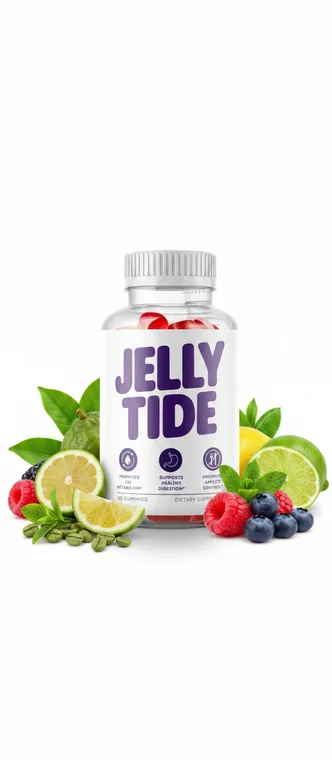
JellyTide is not a synbiotic. It contains no live cultures and no prebiotic fibre — it is an apple cider vinegar and BHB gummy, and the panel says so plainly. If a simple daily habit taken before a meal is what you are after rather than a multi-part stack, the full label and current options are here.
See the label and optionsWhat the combined evidence shows
Systematic work on synbiotics has been published across several clinical areas, and the picture is consistent in a slightly frustrating way.
Against placebo, synbiotics generally do something. Trials in adults with functional digestive complaints report improvements in stool frequency, consistency and self-reported comfort. (Nutr J 2025, PMID 41023690) Work in surgical and hospital settings has examined infection rates and recovery measures with mixed but not discouraging results. (Nutr Metab Cardiovasc Dis 2025, PMID 40348630) Metabolic trials report small shifts in markers that are, on average, in a favourable direction. None of these effects are dramatic, and heterogeneity between studies is high.
Against their own components, the picture almost does not exist. The three-arm trial — synbiotic versus probiotic alone versus prebiotic alone — is the study that would answer the question, and it is rare. The handful that have been run report differences that are small and inconsistent. That is not evidence of no benefit. It is an absence of evidence, which is a different and more honest thing to say.
The reason for the gap is not mysterious. Three-arm trials cost more, need more participants, and risk producing a result no manufacturer wants: that the cheap ingredient did most of the work.
The most useful question to ask about any combination product is not "does it work?" but "does it work better than its cheapest ingredient?" That is the question the synbiotic literature has largely not been designed to answer, and it is the one your money depends on.
Comparing the options in a gut health supplement stack
The table below sets out what each component looks like at the doses used in human research, how stable it is, and how strong the evidence currently is. Use it to work out what you would actually be paying for when a label promises a complete gut health supplement stack in one capsule.
| Component | Form on a label | Dose used in trials | Common dose in blends | Evidence strength |
|---|---|---|---|---|
| Probiotic strain | Genus, species and strain code | 1–50 billion CFU daily | Often declared, sometimes only as a blend total | Moderate, and specific to the named strain |
| Prebiotic fibre (inulin, FOS, GOS) | Grams of fibre | 3–10 g daily | 100–500 mg — far below trial doses | Moderate for regularity |
| Complementary synbiotic | Both of the above in one product | As above, combined | Fibre almost always under-dosed | Moderate against placebo; untested against its parts |
| Synergistic synbiotic | A pairing chosen deliberately | Defined by the specific study | Rare on general retail shelves | Limited, and product-specific |
| Postbiotic | Inactivated cells or metabolites | Commonly stated in billions of cells | Varies widely | Early; see our companion article |
If you are shortlisting the best gut health supplement or the best gut health probiotic supplement, that fourth column is where most products quietly fail. A fibre listed at 200 mg is not a prebiotic dose. It is an ingredient name on a panel.

How to build a stack that you can actually evaluate
If you decide to combine, three principles make the result readable rather than guesswork.
Add one thing at a time. Start with the component that has the clearest evidence for what you are trying to support, give it four to six weeks, and note what changed. Add the second only after that. Starting four products on the same Monday guarantees you will never know which one mattered, and if something disagrees with you, you will not know what to remove.
Buy the parts separately when the doses matter. Separate products let you see both amounts, change one without the other, and drop one entirely. A single blend hides the amounts inside a total and gives you nothing to adjust. This is the strongest practical argument against combination products, and it has nothing to do with whether the ingredients work.
Get the fibre from food where you can. Beans, lentils, oats, onions, garlic, leeks, slightly under-ripe bananas and cooled cooked potato all deliver fermentable substrate in gram quantities, which is the range the research uses. Increase it gradually — going from a low-fibre diet to a high one in two days produces exactly the gas and bloating people then blame on the supplement. The same caution applies to the energy claims attached to this category, which we weigh in what gut supplements do and do not do for energy.
What a gut health supplement stack cannot do
Every honest article about this category needs this section, so here it is.
It cannot substitute for a diagnosis. Persistent diarrhoea or constipation, blood in the stool, unexplained weight loss, fever, vomiting or pain severe enough to wake you are signals to see a clinician. Stacking supplements around an undiagnosed problem delays the thing that would actually help.
It cannot make a permanent change to your microbiome. Sequencing studies repeatedly find that supplement-driven shifts are modest during use and fade within weeks of stopping. (NIH NCCIH, Probiotics) Long-term diet, medication history, geography and genetics set the baseline. A stack borrows the microbiome; it does not buy it.
It cannot compensate for the rest of the picture. Sleep, alcohol, physical activity, medication and overall diet pattern all shape digestion more than any capsule combination. If those are working against you, the stack is fighting a much larger opponent. For a digestive complaint with a specific, testable fix, the trial data on lactase for lactose intolerance is the cleaner comparison.
And it cannot treat, cure or prevent disease. That is a statement about the strength of the evidence as much as about regulation. Supplements support normal function; they are not medicines, and no combination of them becomes one.
Where an apple cider vinegar gummy fits
It does not fit in this category, and we would rather say so than blur it. A gummy built on apple cider vinegar and BHB salts contains no live cultures and no prebiotic fibre. Searches for apple cider vinegar gummies and gut health run these categories together constantly, but a fermented food product and a synbiotic are different things doing different jobs.
What vinegar has going for it is narrower and better documented than the microbiome story: a modest effect on post-meal blood glucose response when taken with or before a carbohydrate-containing meal. That is a real finding and a small one. It is also the reason the format matters — a habit taken before a meal, every day, for months, is the only version of this that has any chance of doing anything. Our home page lays out exactly what is in JellyTide and in what amounts.
If your goal is a microbiome-focused routine, buy a named strain with a stated CFU count and get your fibre in grams. If your goal is a vinegar habit you will keep, that is a different product and there is no shame in the two not overlapping. We applied the same arithmetic to the ketone side of this panel in our piece on postbiotics and the early human data, where the same lesson applies: named actives with numbers, or it does not count.
Medical note: this article is general wellness information, not medical advice, and it summarises published evidence rather than making a product claim. JellyTide is a dietary supplement, not a drug, and is not intended to diagnose, treat, cure or prevent any disease. Speak to a healthcare professional before starting any supplement, especially if you are pregnant, nursing or taking medication.
Frequently asked questions
Is a synbiotic better than a probiotic on its own?
Sometimes, but the evidence is not strong enough to say so as a general rule. Trials that compared a synbiotic against its own probiotic component are uncommon, and the ones that exist report small differences. Most products marketed as synbiotics have never been tested against the parts they are made from.
How much prebiotic fibre does a synbiotic need to contain?
Human trials of prebiotic fibres generally use three to ten grams a day. Many combination products carry a few hundred milligrams, which is a tenth of that or less. A fibre listed on the label at a token amount is there for the ingredient name, not for the dose.
Can I build my own gut health supplement stack instead of buying a blend?
Yes, and it is often easier to check. Buying a named probiotic strain and a separate fibre lets you see both doses clearly, adjust them one at a time, and stop one without losing the other. A single blend hides the amounts and gives you nothing to adjust.
Do I need to take the prebiotic and probiotic at the same time?
There is no good evidence that timing them together matters for most people. Consistency matters more than sequence. Pick a time of day you will not forget, take them with food if they upset an empty stomach, and keep it up for several weeks before judging anything.
What does a synbiotic supplement contain?
A synbiotic contains two parts: a probiotic, which is the live organism, and a prebiotic, which is the fibre meant to feed it. Check the label to see how much of each part is in a serving.
Sources
- NIH Office of Dietary Supplements — Probiotics: consumer fact sheet
- NIH NCCIH — Probiotics: What You Need To Know
- PubMed — randomised controlled trials indexed under synbiotics
- Harvard T.H. Chan School of Public Health — The Nutrition Source: The Microbiome
- Mayo Clinic — expert answers on prebiotics and dietary fibre
- Zhuang K et al. Effects of probiotics, prebiotics, and synbiotics on gut microbiota in older adults: a systematic review and meta-analysis. Nutr J 2025 (PMID 41023690)
- Liu X et al. Efficacy and safety of probiotic and synbiotic supplementation in metabolic syndrome: a systematic review and meta-analysis. Nutr Metab Cardiovasc Dis 2025 (PMID 40348630)
Compare panels, not promises
Before you compare one apple cider vinegar gummies price against another, or add a fourth bottle to a stack, read the panels side by side and count the milligrams. JellyTide's full label and current ordering options are one click away.
View JellyTide options