Do ACV Keto Gummies Work? A Plain Answer
Quick Answer: Do ACV Keto Gummies Actually Work?
Partly, and mostly through routine. ACV keto gummies will not melt fat on their own, and the milligram-level BHB inside a gummy cannot create ketosis the way a low-carb diet does. What a daily gummy like JellyTide can do is make an apple cider vinegar habit easy to keep, alongside sensible eating and a calorie deficit that does the real work.
- What ACV may support: appetite, post-meal glucose and small visceral-fat signals in early research.
- What BHB gummies cannot do: put you into ketosis — that takes carbohydrate restriction, not a gummy.
- The honest framing: a helpful daily habit, not a magic bullet, and only useful alongside diet.

Search “ACV keto gummies” and you will find a wall of before-and-after promises, dramatic numbers and urgent countdown timers. Underneath the noise is a simpler question that almost nobody answers honestly: do ACV keto gummies actually work, and if so, at what? This article reads the evidence and the label rather than the sales page, and maps both onto JellyTide's 525 mg once-daily blend so you can set expectations that survive contact with reality.
The short version is that the two halves of the name behave very differently. Apple cider vinegar has a small but real body of human research behind it. The “keto” half — the BHB ketone salts — is almost entirely marketing at gummy doses. Getting the difference straight is the single most useful thing you can do before you buy anything in this category.
What ACV keto gummies actually are
An ACV keto gummy is a chewable that combines apple cider vinegar with a small amount of exogenous ketone salts, usually beta-hydroxybutyrate bound to calcium, magnesium and sodium. The pitch writes itself: vinegar for appetite and blood sugar, ketones for “fat-burning mode.” It sounds like two mechanisms stacked on top of each other. In practice, one of those mechanisms is barely present.
Vinegar is the star ingredient and the one with a plausible dose. In JellyTide's case the Supplement Facts panel lists a 525 mg proprietary blend with vinegar named first, which by labelling convention means it is the largest component. The gummy is a single serving per day, about 8 calories, with roughly 27 mg of total mineral salts and 1 g of added sugar. Those numbers tell you almost everything about what to expect, if you know how to read them.
The BHB salts are where the story gets thin. Because ketone salts are mostly mineral by weight, the declared minerals on the panel put a hard ceiling on how much BHB can be inside. Tens of milligrams is the answer — a real ingredient in the sense that it exists, but hundreds of times below the gram-scale doses used in the studies people cite. If you want the full arithmetic, our companion breakdown of what BHB ketone salts actually do at a milligram dose works through it row by row.
What apple cider vinegar can and can't do
Here is the part that has actual support. A handful of small human trials, plus a body of mechanistic work, suggest that vinegar taken around meals can modestly blunt the blood glucose spike from a carbohydrate-heavy meal. (Eur J Clin Nutr 1998, PMID 9630389) A frequently cited twelve-week study reported small reductions in body weight (Biosci Biotechnol Biochem 2009, PMID 19661687), waist circumference and visceral fat in people taking a daily dose of vinegar alongside their normal diet. The effects were genuine but modest — measured in a small number of pounds over three months, not a transformation.
What the vinegar evidence does not show is anything dramatic, fast or independent of diet. Nobody in those studies stopped watching what they ate and lost weight because of vinegar. The most defensible way to describe apple cider vinegar is as a mild, meal-timed nudge to appetite and glucose response that can support a diet you are already running — not a lever that overrides one. Timing matters more than branding here, which is why we set out how to take ACV keto gummies and what the label dosage really is.
The honest objection here is that the research is early and the sample sizes are small. That is true, and we would rather say it than inflate it. But “modest and early” is a very different verdict from “useless,” and for a habit that is cheap, low-risk and easy to keep in gummy form, modest support is a reasonable thing to pay for with clear eyes.
See the real 525 mg label, then decide
If a once-daily apple cider vinegar gummy is the habit you actually want — not a miracle, a habit — JellyTide's full Supplement Facts panel and current bundle options are one click away, with the 60-day money-back guarantee spelled out in plain language.
View JellyTide optionsThe BHB half: why the “keto” claim overreaches
Beta-hydroxybutyrate is a ketone body your own liver makes when carbohydrate is scarce. Swallowing it as a mineral salt does raise blood BHB for an hour or two — but only at the gram doses used in research, typically 10 to 25 grams in a single serving. (Front Physiol 2017, PMID 29163194) Even then, raising blood ketones from the outside is not the same as nutritional ketosis, and there is no reliable evidence it causes fat loss. Some researchers argue the opposite: if your blood is full of a fuel you drank, your body has less reason to burn the fuel stored on you.

Now shrink that gram-scale dose down to what fits in a gummy. JellyTide's panel implies on the order of 27 mg of total mineral salts across calcium, magnesium and sodium. That is not a smaller version of the studied dose — it is a different order of magnitude, roughly three hundred to a thousand times less. At that level there is no measurable blood-ketone rise to discuss. So when a label leans on the word “keto,” it is describing a flavour of ingredient, not a physiological effect. Understanding that one fact immunises you against most of the hype in this entire category.
Three common myths, addressed honestly
Myth 1: “The gummies put you in ketosis.” They do not, and no gummy does. Ketosis is a state your metabolism enters when carbohydrate is low enough that your liver switches to making ketones. A pinch of exogenous BHB cannot manufacture that state; only your diet can. If ketosis is your goal, the food on your plate is the mechanism, and a gummy is at most a passenger.
Myth 2: “If it is a gummy, it is just candy.” This one is fair as a warning but wrong as a blanket rule. Some keto ACV gummies are effectively vinegar-flavoured sweets with several grams of sugar per serving, which defeats the purpose. The fix is to read the label: JellyTide carries 1 g of added sugar and about 8 calories per gummy, with vinegar as the first-listed active. That is a formulation built to keep the sugar trivial, and it is a genuine point of difference. If you want the checklist we use, our guide to how to compare keto ACV gummies for weight loss lays out the label tests that separate the two.
Myth 3: “It works without changing my diet.” Nothing in the honest evidence supports this. Every study that found anything found it in people who also ate reasonably. Apple cider vinegar is a supporting actor. If it helps you eat a little less at a meal, or smooths a post-lunch slump, it is doing its job — and that job only matters inside a diet that is already pointed in the right direction.
So do ACV keto gummies actually work for JellyTide specifically?
Judge JellyTide as what it overwhelmingly is: a once-daily apple cider vinegar gummy with a trace of mineral BHB and a trace of added sugar. On that basis, the realistic case for it is straightforward and defensible. It delivers a sensible daily dose of vinegar in a format people actually keep taking, without the enamel-stripping harshness of drinking vinegar straight, and without the sugar load that ruins lesser gummies.
The unrealistic case — that the “keto” in the name adds a fat-burning engine on top — is the part to let go of. Once you do, you stop being disappointed by the wrong thing and start evaluating the product on the claim it can actually meet. That reframing is the whole point of this article, and it is why we would rather undersell the BHB than let a shopper overpay for a word.

If you are still weighing the decision, the deciding question is not “is this magic?” It is “do I want a daily vinegar habit, and is this a clean, convenient way to keep one?” For a lot of people the answer to that is yes, and it is a perfectly rational reason to buy. Set the expectation at “useful support for a diet,” give it a real two-to-three-month run, and you will judge it fairly.
Medical note: this article is general wellness information, not medical advice, and it reviews published evidence rather than making a product claim. JellyTide is a dietary supplement, not a drug, and is not intended to diagnose, treat, cure or prevent any disease. Speak to a healthcare professional before starting any supplement, especially if you are pregnant, nursing or taking medication.
Frequently asked questions
Do ACV keto gummies actually put you into ketosis?
No. Only carbohydrate restriction makes your own liver produce ketones, which is what nutritional ketosis means. The BHB salts in a gummy arrive as tens of milligrams, hundreds of times below the gram doses that briefly raise blood ketones in studies, and even those doses do not create ketosis. A gummy cannot put you into ketosis; your diet does that.
How long before ACV keto gummies show results?
There is no fixed timeline, and anyone promising one is guessing. Apple cider vinegar research runs over weeks to a few months, and the effects reported are modest support for appetite and post-meal glucose rather than dramatic loss. Treat a two to three month daily habit as a realistic trial, and expect the diet around it to do most of the work.
Are keto ACV gummies just sugar and hype?
Some are, which is why the label matters. A gummy loaded with several grams of added sugar undermines the point. JellyTide carries 1 g of added sugar and about 8 calories per gummy, with the vinegar listed first in a 525 mg blend, so it is mostly ACV rather than filler. The hype is in the marketing, not necessarily the gummy itself.
Is JellyTide's dose of ACV and BHB enough to matter?
For apple cider vinegar, the once-daily dose is in a reasonable range to support a vinegar habit that most people abandon in liquid form. For BHB, no gummy on the market carries a dose that matters physiologically; the roughly 27 mg of total mineral salts here is a flavour and label ingredient, not a ketone therapy. Judge it as an ACV gummy.
What is in an ACV keto gummy?
An ACV keto gummy combines apple cider vinegar with BHB mineral salts in a chewable form. JellyTide pairs them in one blend you take once a day.
Sources
- NIH NCCIH — Weight Loss and Complementary Health Approaches
- NIH Office of Dietary Supplements — ingredient fact sheets
- PubMed Central — trials of apple cider vinegar and exogenous ketone salts
- FDA — Questions and Answers on Dietary Supplements
- Liljeberg H, Björck I. Delayed gastric emptying rate may explain improved glycaemia in healthy subjects to a starchy meal with added vinegar. Eur J Clin Nutr 1998 (PMID 9630389)
- Kondo T et al. Vinegar intake reduces body weight, body fat mass, and serum triglyceride levels in obese Japanese subjects. Biosci Biotechnol Biochem 2009 (PMID 19661687)
- Stubbs BJ et al. On the metabolism of exogenous ketones in humans. Front Physiol 2017 (PMID 29163194)
Related reading
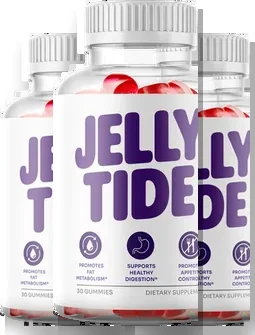
Ready to keep the habit, not chase the hype?
JellyTide is a once-daily apple cider vinegar gummy with an honest label: 1 g added sugar, about 8 calories, a 525 mg vinegar-first blend, and a 60-day money-back guarantee. See the panel and current bundles before you buy.
Check availability & pricing